How Old Is My House? 5 Free Ways to Find Your Home's History
The fastest free way to find out how old your house is: search your address on your county tax assessor’s property records — the listing almost always shows a “Year Built” field. If the official record is missing or suspect, four more free sources can pinpoint it: date stamps hidden inside original fixtures, your deed and title history, old building permits, and historical fire-insurance maps. Here’s how to use all five.
You’ve moved in. You love the quirks. But maybe you’ve noticed the floorboards creak in a specific way, or the windows look a little... different.
And suddenly, you're asking yourself: "How old is my house, exactly?"
It’s not just a curiosity thing. Knowing the exact age of your home is crucial for insurance, renovation planning, and—most importantly—understanding your property's resale value.
While we previously talked about how age impacts value decline, today we are going on a treasure hunt.
We aren't talking about depreciation here. We are talking about discovery.
If you don't have the original papers and your real estate agent is long gone, don't worry. You can usually find the answer without spending a dime.
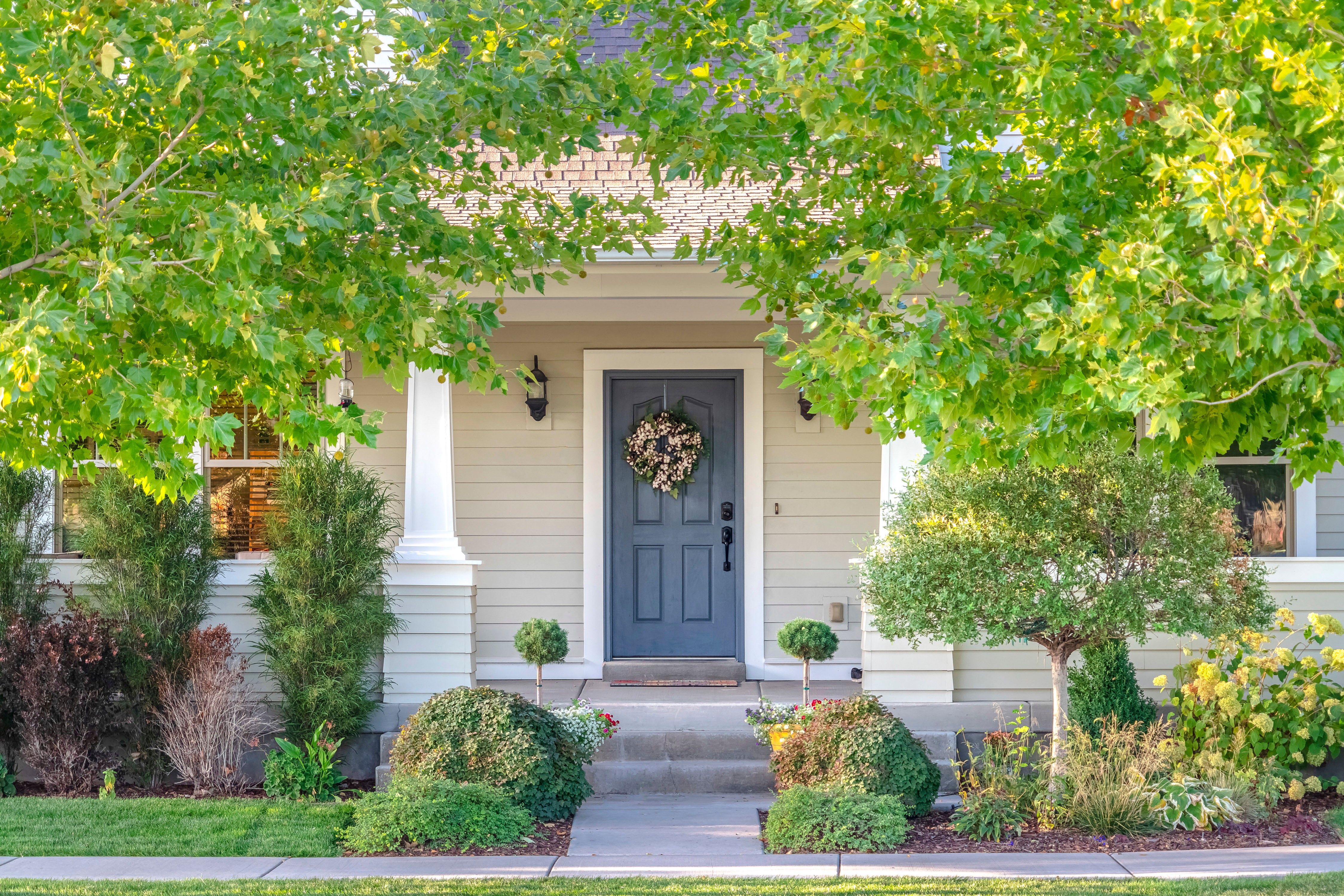
Here are 5 free ways to uncover your home’s history and pinpoint its birthday.
1. The "Paper Trail": Tax Assessor’s Records
This is usually the most reliable method, and it’s almost always free.
Local governments love paperwork. Your county tax assessor keeps detailed files on every property to determine how much tax you owe. These records almost always list the "Year Built."
How to do it:
Go to Google and search for "[Your County Name] Tax Assessor Property Search."
Enter your address.
Look for fields labeled "Year Built," "Actual Year Built," or "Effective Year Built."
A quick warning on "Effective Year":
Sometimes you will see two dates. The "Actual Year" is when the foundation was poured. The "Effective Year" is updated if the house had a massive renovation (like being stripped to the studs).
If you see a house that looks Victorian but the tax record says 1985... check if it lists an "Effective Year."
2. Check the "Guts" of the House (Toilet Tanks and Water Meters)
Okay, this sounds weird. But trust me on this one.
If official records are missing (which happens often with homes built before the 1900s), your plumbing can be a surprisingly accurate timestamp.
Building materials are time-stamped.
Specifically, lift the lid off your toilet tank.
If the toilet is original to the house (or at least an early renovation), the date of manufacture is often stamped into the porcelain on the underside of the lid or inside the tank.
Why this works:
Plumbers generally install fixtures within 6 months of the house being built.
You can also check your water meter. According to home inspection data, nearly 55% of older properties still have water meters with date tags that correspond closely to the home's construction or initial utility hookup.
It’s a dirty job, but it gives you a solid clue.
3. Dig Up the Chain of Title (Property Deeds)
If the tax assessor website is a dead end, you need to go deeper. You need the property deeds.
A deed doesn't just say who owns the house now; it tells the story of who owned it before you.
You can typically access these through the County Recorder’s Office. Many counties now have these records digitized online for free.
What you are looking for:
You want to trace the "Chain of Title" back as far as you can.
You are looking for the very first deed transfer—the moment the property went from a builder or a developer to the first individual owner.
That transfer date is usually your home's birthday.
Pro Tip:
If your house is in a historic district, you might even find the original "land patent," which is the very first time the land was granted by the government.
4. Architectural Clues and Style
Sometimes, you have to play detective.
If you can’t find a paper trail, the house itself will tell you its age—if you know what to look for. American housing trends have changed drastically decade by decade.
The Flooring:
Pre-1950: You’ll likely see hardwood floors with narrow strips (about 2 inches wide).
1950s-1960s: Linoleum and wider plank hardwood became common.
1970s: This is the era of shag carpet and darker stained woods.
The Layout:
Does your home have an "Open Concept"? Chances are it was built (or heavily renovated) after 1990.
Homes built before World War II usually have distinct, separated rooms (kitchen, dining, living) to conserve heat.
The Materials:
Check the basement. If you see knob-and-tube wiring (which looks like porcelain cylinders), your home was likely built before 1940.
If you aren't sure what style you have, the National Association of Realtors offers guides on architectural styles that can help you narrow down the decade.
5. Fire Insurance Maps (Sanborn Maps)
This is the coolest method, hands down.
From 1867 to 1970, the Sanborn Map Company created incredibly detailed maps of roughly 12,000 U.S. cities and towns. They did this to assess fire liability for insurance companies.
These maps don't just show streets; they show individual buildings, their footprint, and what they were made of.
How to use them:
Visit the Library of Congress online collection.
Search for your city and state.
Find maps from different years.
If your house appears on the 1920 map but not the 1910 map, you’ve just narrowed your build date down to that 10-year window.
Why Does the Age Even Matter?
You might be thinking, "Does it really matter if it was 1930 or 1935?"
Yes. It matters a lot.
It’s not just about history; it’s about safety and your wallet.
Lead Paint: The U.S. banned lead-based paint in 1978. If your home is older than that, you need to be careful when sanding walls during a renovation.
Asbestos: Common in flooring and insulation in homes built between 1930 and 1970.
Electrical: Homes built before the 1960s often don't have grounded outlets (the three-prong ones), which can be a hazard for modern electronics.
According to the U.S. Census Bureau, the median age of owner-occupied homes in the U.S. is 39 years.
But in places like New York or the Northeast, that number is much higher.
Knowing the age helps you predict what is about to break.

Final Thoughts
Uncovering the history of your home connects you to it. It stops being just a building and starts being a place with a story.
Whether you are checking toilet tanks or scrolling through 100-year-old maps, finding the answer to "how old is my house" helps you make smarter decisions about renovations and maintenance.
Planning to sell your historic (or not-so-historic) home?
You don't need to guess how the age affects the price. At Locqube, we use real-time data to help you price your home accurately, regardless of when it was built.
Try our Home Value Estimator today.
Thinking about selling? See what your home is worth — and exactly what you'd walk away with — in about 60 seconds with locqube's free home valuation. Then sell your way: list for as little as 1.99% instead of 5–6%, and keep more of your equity. Get your free home value estimate →
By Manuel Pantiga, licensed real estate broker (New York & Connecticut) and co-founder of locqube.
Wondering about your own house?
Free value estimate for any NY or CT address. In seconds, no agent visit.
See what my house is worth →Or start your listing — $899 flat, or a dedicated agent at 1.99%.
See the whole decision with real numbers in it.
Your home's value from recorded sales around it, your equity, and what the sale actually costs — before you talk to anyone.
Get my free home estimate